Traces of Rocco. A documentary film by Marina Resta

Log line
A journey through the narratives of Basilicata region of the past and present, in search of the traces of Rocco Scotellaro.
Synopsis
Traces of Rocco is a journey across the Basilicata of the past and of the present, in search of the iconographical and metaphorical traces of the Southern Italian poet, social researcher and politician Rocco Scotellaro.
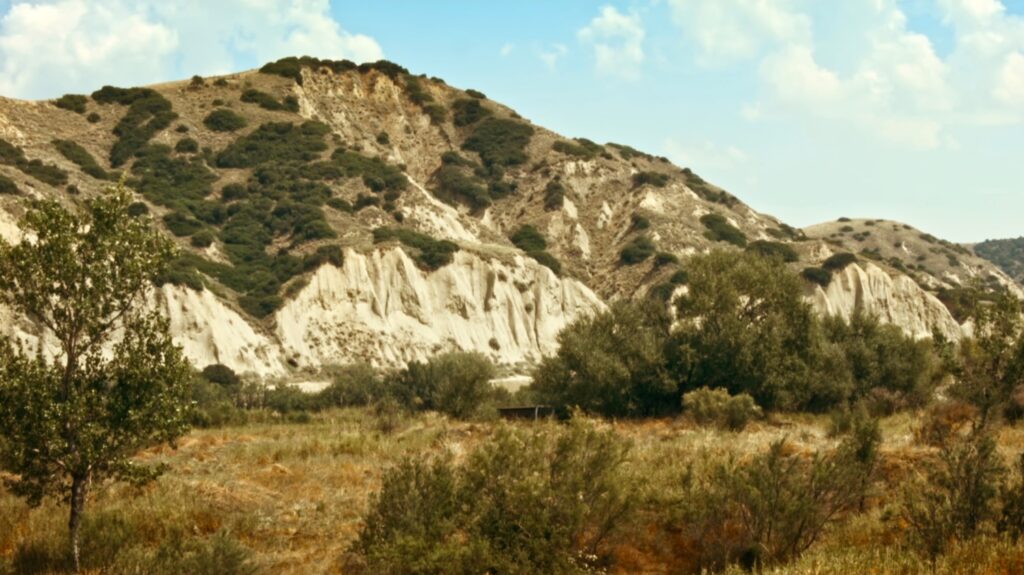
Developed as part of Zavattini Prize 2018/2019, it’s a documentary short-film that juxtaposes heterogeneous audiovisual materials, -archival and shot ad hoc with observational style- generating a short-circuit among the past and the present.
Trailer – exerpt
Trailer_Tracce di Rocco_H264 from Marina Resta / WTFF on Vimeo.
Director’s Statement
The film was developed as part of the Zavattini Prize 2018/2019, promoted by AAMOD (Archivio Audiovisivo del Movimento Operaio e Democratico – Audiovisual Archives of the Workers and Democratic Movement), which stimulated my sensitivity and curiosity for viewing and researching archival materials and (re)using them creatively and respectfully at the same time. I chose to focus on Basilicata, a region to which I am very attached for biographical reasons, and also the birthplace of Rocco Scotellaro.
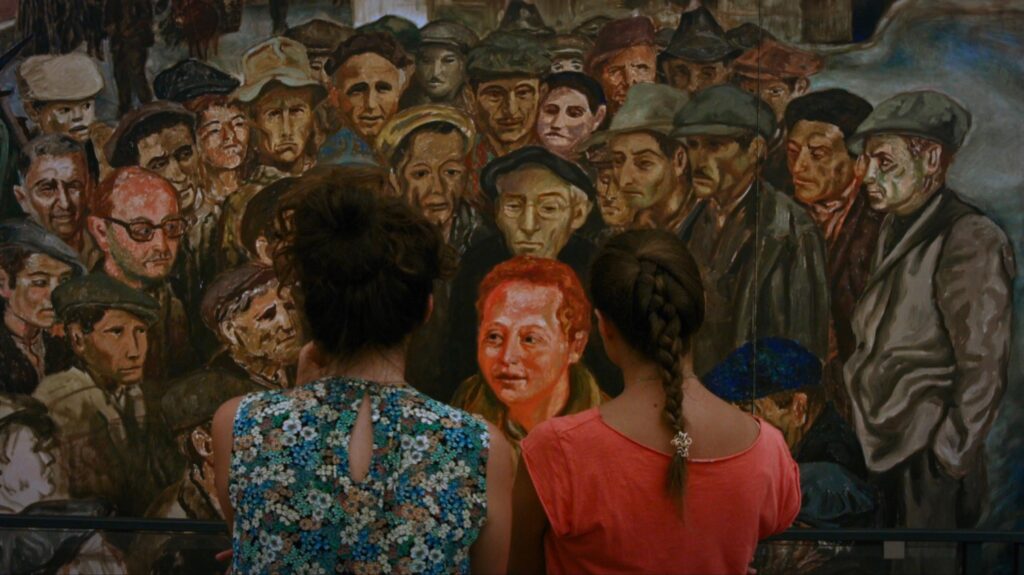
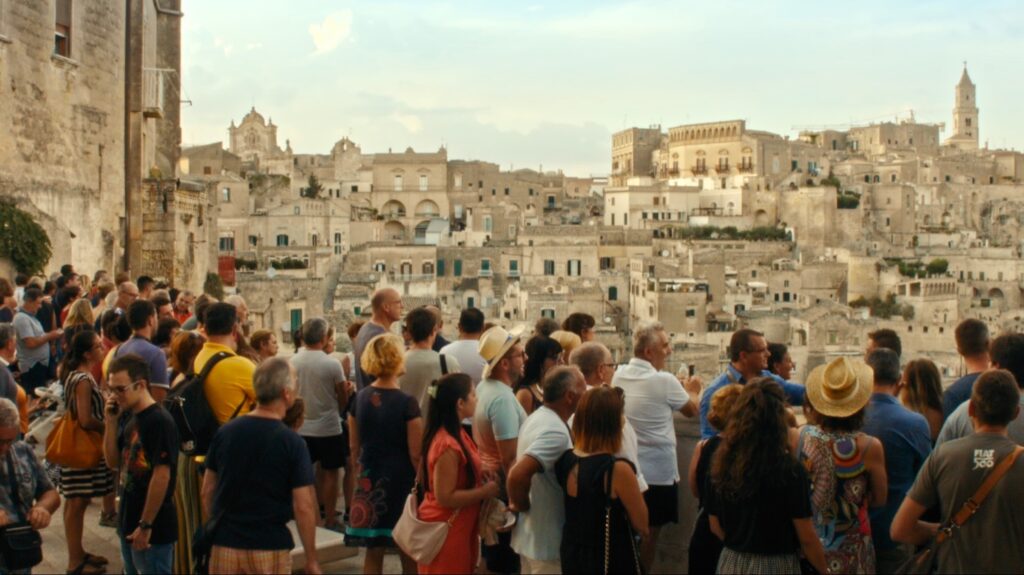
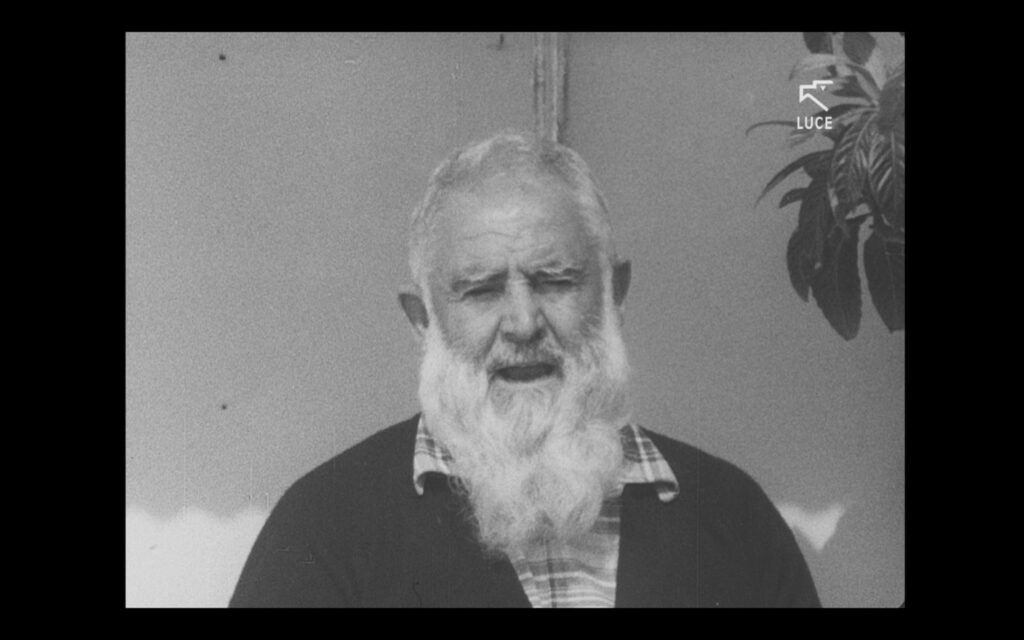
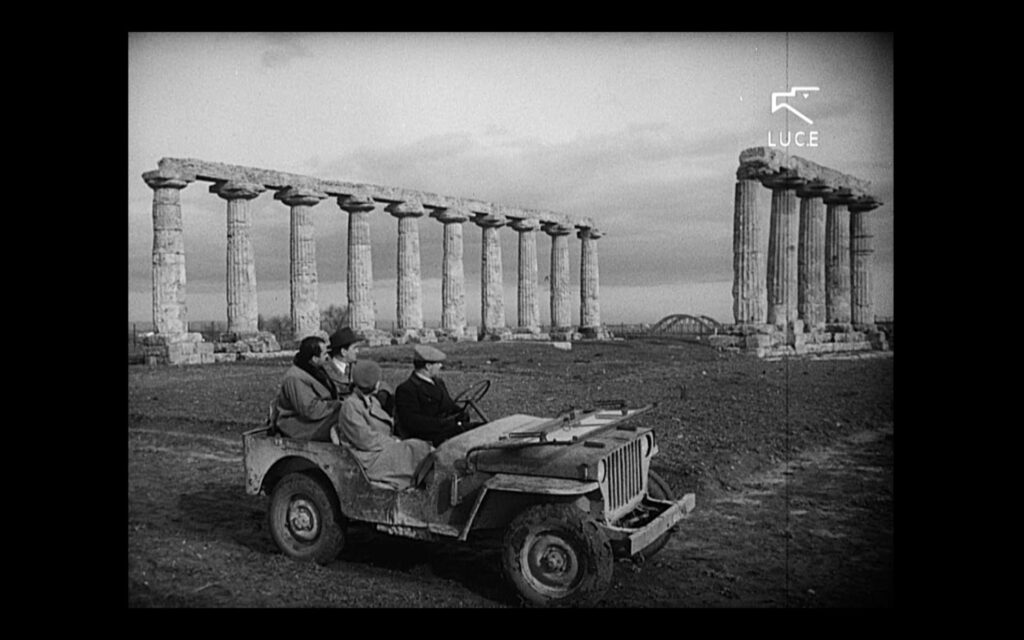
In fact, the inspiration for Traces of Rocco stems from my personal fascination with this important person from Basilicata, a figure as complex – in just 30 years of life he was a poet, writer, socialist mayor of his hometown Tricarico (MT) and social researcher with Manlio Rossi Doria – as almost forgotten. I have tried to confront Scotellaro and what he represents for Basilicata by working on his absence. Physical absence, absence of audiovisual materials depicting him, absence of direct witnesses (many of them have already died). So my work was to search for his traces and then to disseminate them in the film. The traces are meant both as signs of his life (his village, his house, his grave, the Luce newsreel announcement of his posthumous achievement of the Viareggio Prize for the collection of poems “È fatto giorno”), but also the iconographic traces that preserve and transmit his memory (plaques, paintings, murals and even the bronze effigy depicting Michele Mulieri, one of the “Peasants of the South” interviewed for the homonymous book by Scotellaro). Carlo Levi, a friend of the Lucanian poet from the time of his confinement in Basilicata under Fascism, played a leading role in passing on the figure of Scotellaro, contributing to create his mythology. Particularly in the triptych “Lucania ’61,” now on display at the Museo Nazionale di Matera in Palazzo Lanfranchi, Levi makes Scotellaro the focus of the entire painting and the metaphor of Lucania itself. Basilicata and southern Italy in general suffered (and continues to suffer) external gazes’ storytelling, which, between the late 1940s and the 1960s were polarized between the “pure place outside History” that embodies the Levi vision, and the promises of technical and infrastructural development linked to the rhetoric of Agrarian Reform and the implementation of the Marshall Plan. A third narrative that runs alongside these in the film is the one linked to Matera 2019 – European Capital of Culture, the storytelling of the cultural redemption of a city and territory long considered “the shame of Italy”, now invaded by tourists. The film interweaves all these threads -the different narratives and rhetorics and Scotellaro’s traces- by comparing archival materials from AAMOD and Istituto Luce with observational footage shot today in those same places. However, my choice was not to conceal the heterogeneity of the materials and their different provenance, but rather to highlight it, making clear the partiality of each narrative and ultimately the impossibility of reaching a vision on Basilicata, if not fragmentary and sometimes contradictory. Similarly, Rocco Scotellaro remains in the film an elusive, ghostly figure, of whom one can always aspire to find new traces.
Technical Sheet
Digital HD 16:9, color, b/n, stereo
Year 2023
Running 16’46”
Archival research, script, screenplay, directing, editing: Marina Resta
Cinematography, sound: Marina Resta, Giulio Todescan
Assistant Director: Giulio Todescan
Sound Mix, Sound Design: Luca Scapellato, Frank Martino
Color Grading: Giorgia Ripa
Graphic Design e Poster: Andrea Xausa
Produced by Marina Resta for Working Title Film Festival in collaboration with Fondazione AAMOD – Archivio Audiovisivo del Movimento Operaio e Democratico and Istituto Luce
Director’s Bio-filmography
Marina Resta was born in Altamura (Bari) in 1984. She graduated in Film Studies from Università di Bologna and Freie Universität Berlin. She attended the Documentary course at the Film School Scuola Civica “Luchino Visconti” in Milan and a Master’s in Production and Communication for Audiovisual and Digital Media at Ca’ Foscari University in Venice. As a filmmaker she made Milano fa 90 (2013) and L’acqua calda e l’acqua fredda (2015), presented in several festivals including Sguardi Altrove in Milan and Foggia Film Festival. In 2018 Traces of Rocco was selected among the 10 finalist projects of the Zavattini Prize. The film, completed in 2023, premiered in Matera on the centenary of Rocco Scotellaro’s birth and has been selected for numerous international festivals, including the Bristol Radical Film Festival (United Kingdom), Festival Fotogenia (Mexico), San Diego Italian Film Festival (USA), Doku Baku (Azerbaijan), Izdoc (Turkey), Festival International de Cinéma et Memoire Commune (Morocco), ShorTS – International Film Festival (Trieste), Social World Film Festival (Vico Equense), Filmare la Storia (Turin), and was awarded a special mention at the Vittorio De Seta Prize in 2024 and in 2025 it received the award for best Italian video poetry at the “La poesia che si vede” competition in Ancona.
In 2016, she founded the Working Title Film Festival – Festival del cinema del lavoro in Vicenza, of which she is the artistic director and organiser.
Since 2018, she has been teaching Audiovisual and Multimedia Disciplines at an art school.
Archival Footage
AAMOD:
Lucania dentro di noi, Libero Bizzarri, 1967
Via Appia, Vittorio Gallo, 1956
Metaponto: la via del tabacco, Libero Bizzarri, 1967
Deserto di uomini, Franco Taviani, 1965
Borgate della riforma, Luigi Scattini, 1954
Istituto Luce:
Oltre Eboli, Camillo Mastrocinque, 1948-1953
Dove il tempo si era fermato, Fernando Cerchio, 1970
O brigante o emigrante, Fernando Cerchio, 1970
La terra nuova, Francesco De Feo, 1952
Settimana Incom, Premio Viareggio, 1954
Stills